


EN
Meitner for primary schools spans from early grades to lower secondary. With tools for assignments, assessment, planning, and communication, Meitner becomes an easy choice.

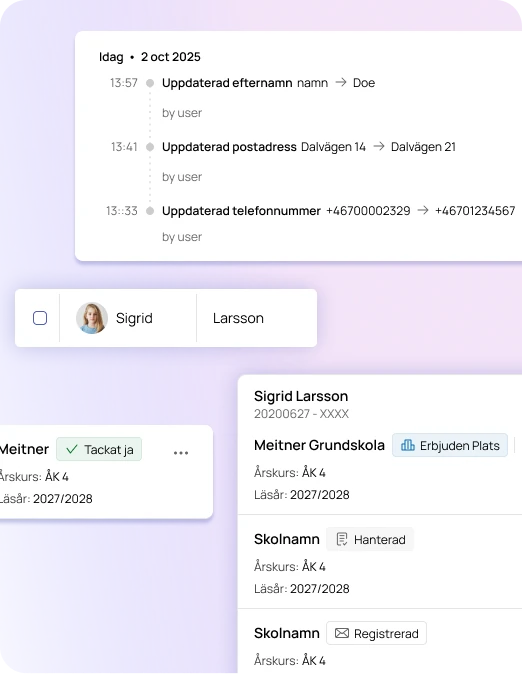
In Meitner’s queue and application module, guardians can put their children in the queue from the age specified by the school. The application collects all personal details, contact information, and sibling priority. The school administration can then easily get an overview of everyone in the queue for primaryschool and admit students in order. Information about an available spot can be sent from Meitner to guardians, who can then accept the spot through BankID.
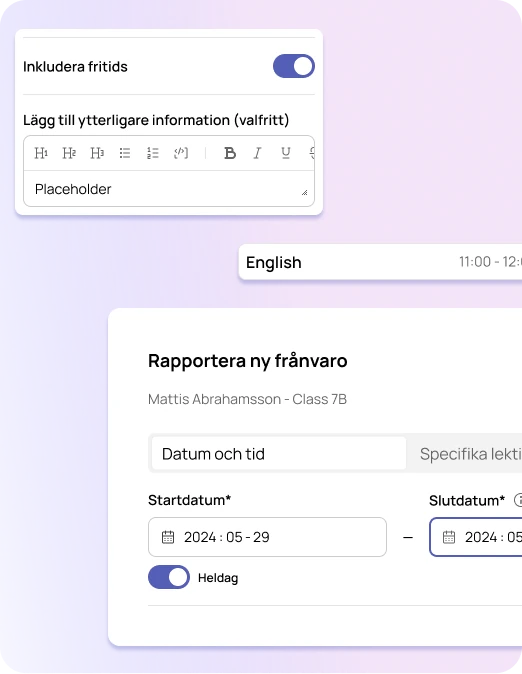
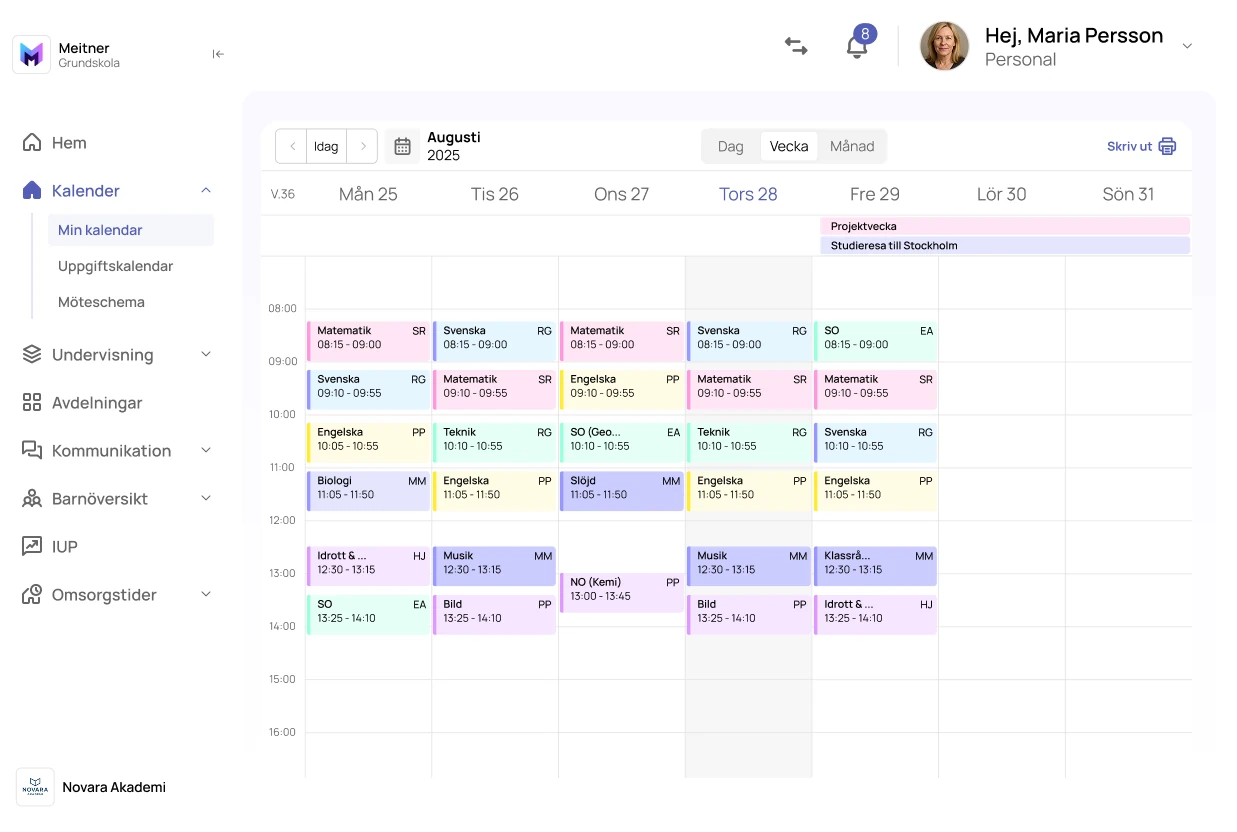
The school can choose to import its schedule from Skola24 or create it through Meitner’s scheduling tool. The schedule is then clearly visualized in the platform, showing where students and teachers should be at any given time. Teachers can take attendance and report absences for each lesson. When a guardian reports an illness through the school platform, it also updates the after-school care module in Meitner, informing staff that the student is ill.
Meitner’s workspaces consist of a group of students and a subject. Here you’ll find the planning tool, assignments, assessments, core content, and grading criteria from the National Agency for Education’s curriculum. The teacher can gather all teaching materials in the workspace and follow students’ work in real time. Teachers can also reuse material between different workspaces and carry out cross-subject projects. Guardians also have access to follow their children’s work. Meitner’s workspaces have seamless integration with Google Drive.
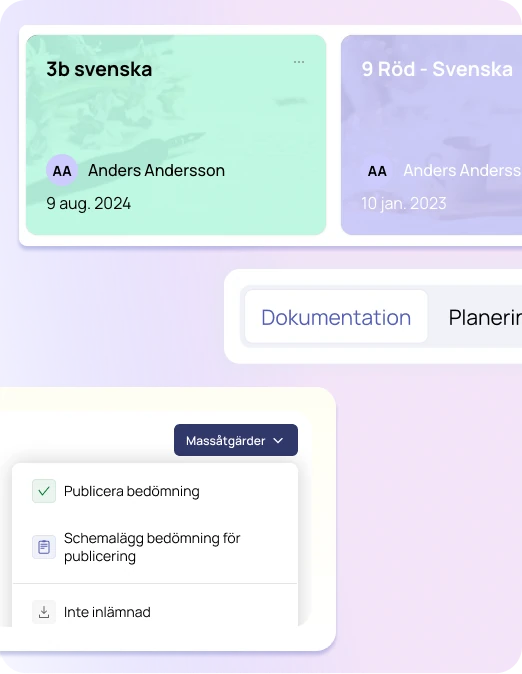
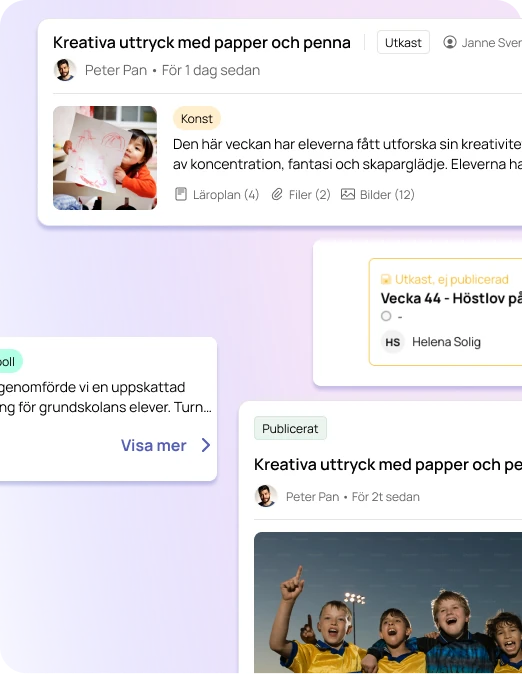
Since all grading criteria, core content, and the curriculum are imported from the National Agency for Education into the school platform, the teacher can easily link assignments and plans to them. This forms the basis for assessing goal attainment, which can then be displayed in overviews for the teacher, mentor, and principal, on individual, group, and class levels. In this way, it becomes easier to identify students who are falling behind in school. The material is also used ahead of the partent-teacher meeting with the mentor, the student, and the guardians.